High-Carbon Alloy for Precision Tool Steel Printing
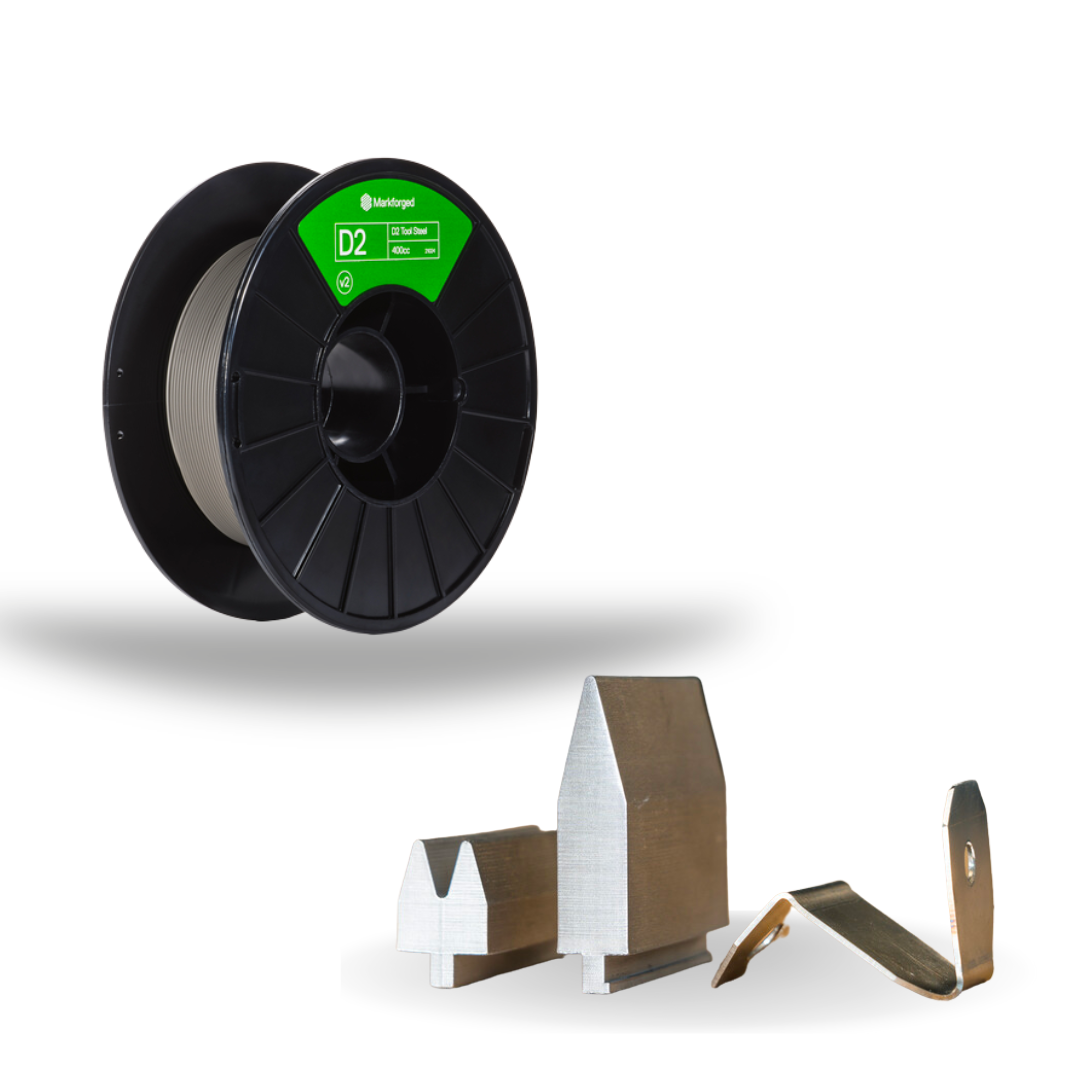
D2’s high-carbon and chromium content produce a dense carbide structure that delivers predictable wear resistance under repetitive load. This microstructure maintains edge integrity, enabling reliable performance in industrial cutting tools 3D print applications such as shear blades, punches, and forming dies. This material also retains its hardness after heat treatments. As a result, it supports tight-tolerance tooling geometries that withstand sliding abrasion, impact, and compressive stress without losing dimensional accuracy.
Performance Characteristics for Industrial Cutting Tools 3D Print Workflows
D2 works well in die steel additive manufacturing because it provides stable mechanical behavior across extended duty cycles. In addition, its resistance to plastic deformation improves tool longevity, while its moderate corrosion resistance helps maintain surface quality in dry or controlled manufacturing environments. When processed correctly, the alloy delivers consistent hardness and structural stability. This makes it suitable for production dies, blanking inserts, and precision wear components that operate in high-pressure tooling systems.
Process Considerations for Die Steel Additive Manufacturing
D2 tool steel’s carbide-rich composition requires controlled thermal processing to achieve full mechanical performance. Post-print heat treatment refines hardness, improves toughness, and stabilizes the final microstructure. Although its machinability is lower than other tool steels, the durability offsets the added processing requirements. In precision tool steel printing workflows, this balance of hardness, wear resistance, and predictable dimensional behavior allows engineers to deploy D2 tool steel to demanding applications where tool failure directly affects throughput.