
Medical device manufacturing demands precision, consistency, and compliance with strict quality standards. CNC machining solutions play a critical role in producing complex components with tight tolerances and high repeatability, essential for orthopedic implants, surgical instruments, and diagnostic systems. CNC machined orthopedic implants, surgical instruments, and diagnostic systems are complex because they require tight tolerances, reliability, and accuracy. Within the advancing medical industry, 3D printing is now a powerful complement to CNC machining. It offers engineers rapid prototyping capabilities and the freedom to create intricate geometries. For example, it’s capable of making customized implants and prosthetics to detailed anatomical models. 3D printing supports personalized medicine, improving patient outcomes and streamlining surgical planning.

Combining CNC machining solutions with 3D printing allows manufacturers to deliver both precision and design flexibility. CNC provides dimensional accuracy and surface quality, while 3D printing accelerates development cycles and enables complex, organic geometries. This hybrid approach is ideal for producing next-generation medical devices—such as implants with 3D printed lattice structures and machined interfaces optimized for fit and load-bearing function.
The medical industry and CNC manufacturing align in a wide range of applications, for these applications have time constraints and incomparable precision, which is where other machining processes fail. Therefore, machinist have embraced the CNC manufacturing processes to make precision parts. Some of these medical devices include:
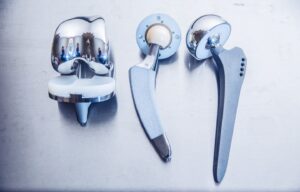
Material selection is crucial in medical device manufacturing. CNC machining solutions typically employ biocompatible metals like titanium and stainless steel for their strength, corrosion resistance, and long-term performance. In contrast, 3D printing leverages medical-grade polymers and resins, chosen for their ability to withstand sterilization and their compatibility with human tissue. Choosing the right material ensures product safety, functionality, and regulatory compliance.
Both processes must adhere to stringent industry standards. Compliance with ISO 13485 is essential, as it governs quality management systems for medical device manufacturing. Engineers must ensure full traceability, process validation, and consistent product output to meet global healthcare regulations.
To stay ahead in a rapidly evolving industry, manufacturers are increasingly turning to advanced technology providers for support. AW Miller partners with leaders such as 3D Systems and Markforged to equip shops with the tools they need to meet the specific demands of medical applications. These systems are designed with healthcare in mind—offering biocompatible, sterilizable materials and configurations optimized for high-performance production.
One example includes a complex orthopedic implant developed using 3D Systems’ FDA-cleared VSP Orthopedics platform. This case addressed a patient-specific deformity caused by previous hardware, showcasing how 3D printing enables truly personalized care.
Looking ahead, innovations in automation, material science, and AI will further enhance CNC and 3D printing capabilities. For engineers and manufacturers, investing in this hybrid model not only improves efficiency and precision but also ensures adaptability in a healthcare landscape that values speed, safety, and customization.
The integration of CNC machining and 3D printing is set to advance further with developments in automation, artificial intelligence, and material science. The innovation will enhance the efficiency and capabilities of medical device manufacturing, leading to more personalized and effective healthcare solutions
