Aerospace

Aerospace Manufacturing Standards

The aerospace manufacturing industry demands a higher level of precision and accuracy to ensure safety, durability, and performance of the aircraft. Each component, from bushings to structural assemblies, must meet tight tolerances and adhere to strict quality benchmarks. The industry revolves around producing millions of parts for aircraft and spacecraft, with consistency and accuracy at the core of every process. In this environment, high-performance materials are the standard. For example, titanium, superalloys, stainless steel, and aluminum must all be machined efficiently to retain structural integrity. Every detail matters in the aerospace cnc machining industry where precision directly impacts performance, safety, and regulatory compliance.
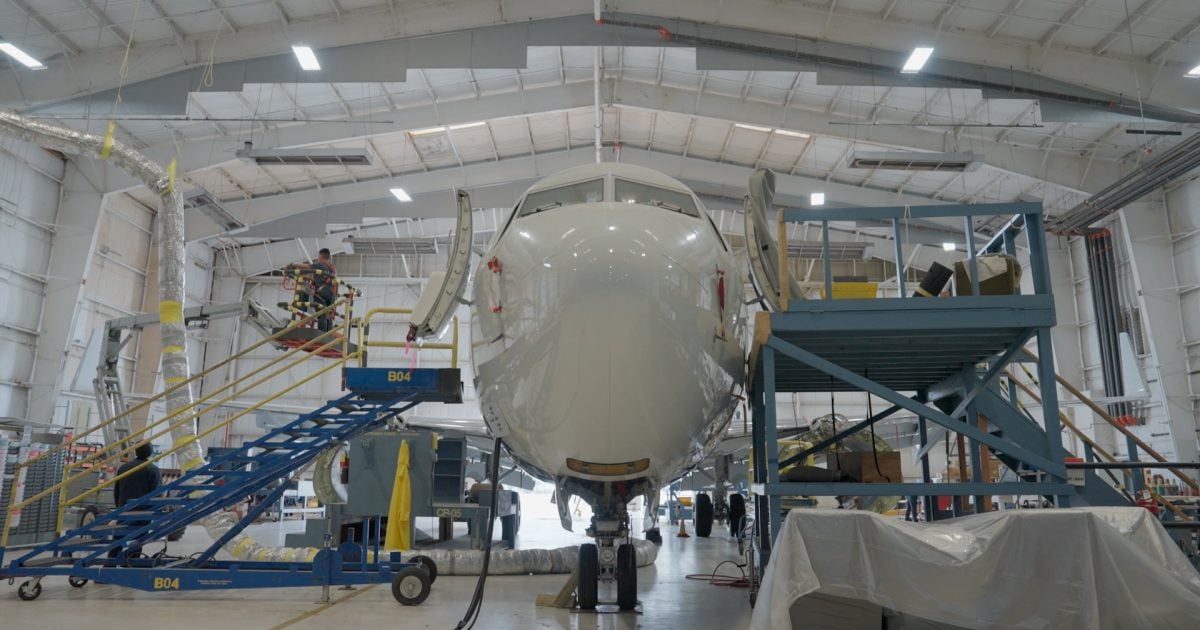
Aircraft engine made with Aerospace CNC machining solutions

The United States: A global Aerospace Manufacturing Leader

The U.S. continues to lead the global aerospace sector, fueled by a skilled workforce and advanced aerospace machine tools and technology. American manufacturers hold a competitive edge through innovation, engineering precision, and operational efficiency. This dominance is not accidental—it’s earned through relentless pursuit of excellence and investment in cutting-edge machining solutions. Backed by extensive technical expertise, the aerospace workforce ensures that every production line delivers at scale. These professionals rely on robust machining systems to keep pace with demand while maintaining rigorous safety and performance standards.

Aerospace CNC Machining with A.W. Miller and Mazak

Mazak CNC machines are built to meet the complex demands of aerospace manufacturing, offering the precision and power needed to machine structural components, engine housings, control surfaces, and landing gear. Engineered to handle high-stress, high-heat materials, these systems deliver process stability, reduce waste, and integrate seamlessly into aerospace workflows. With flexible configurations, they give manufacturers greater control over timelines and part quality.

At A.W. Miller, we support aerospace manufacturers with tailored CNC solutions that prioritize accuracy, efficiency, and scalability. From advanced machine tools to intelligent software and expert support, our team helps customers improve cycle times, extend part life, and streamline production. Contact us to learn more about out aerospace cnc machining solutions.

Aerospace Parts and Components​

StructuralLanding GearEngineInteriorSystem Controls
FuselageAxle BeamsBlisksGallery PartsCovers
WingsMain CylindersBladeServing TrolleysHousings
Tail AssemblySlidersDiscsSeatsGears
BulkheadsLinksCasingsSeat TracksGear Boxes
Exit DoorsBracketsShaftsSupport BeamsShafts
Cock PitBrakesNacelleRod EndsHydraulic Manifolds
Engine PylonsShaftTurbo Housings Stick Shakers
  Fittings Flap Traps
  Ducts Control Surfaces
  Thrust Reverser Components Electric Connectors
  Impeller Bracket  
  Impeller  
Training Classes

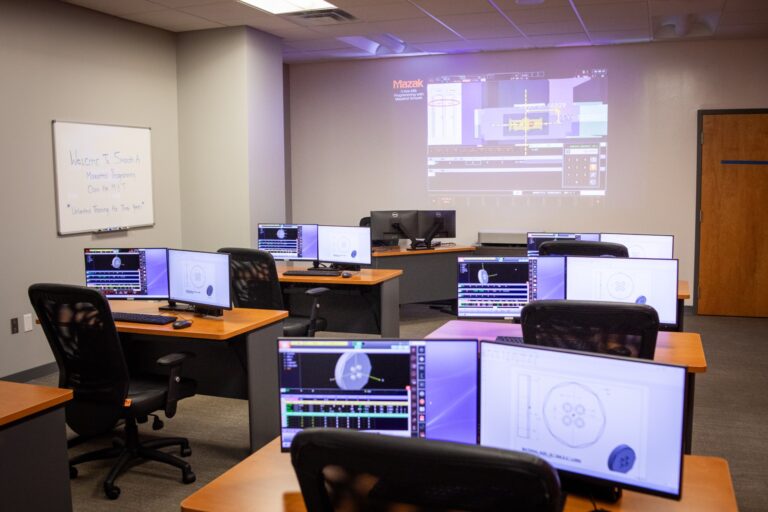
If your team needs assistance with learning how to use the CNC machinery and technology, Mazak offers a variety of training classes. These will ensure your aerospace manufacturing teams are up-to-date on how to use and maintain the machines effectively. Please contact us to learn more about these training classes.

Service Repair

AW Miller is proud to offer a team of Mazak certified application and service engineers that will assist you with service requests in a timely manner to decrease down time. We will also help you to avoid service requests with routine maintenance tips. Please click here for more information.

The Role of 3D Printing in Aerospace Manufacturing

3D printing in aerospace is an essential tool in manufacturing aircraft components, not as a replacement for CNC manufacturing, but as a powerful complement that expands design freedom and speeds up development. With the ability to print complex geometries—like internal channels, lattice structures, and organic forms—engineers can now create lightweight, high-strength parts that were once impossible to produce. For example, this capability is particularly valuable in applications such as jet engines and satellite components, where every gram matters. As a result, the integration of 3D printing with CAD-driven workflows, allows aerospace teams to quickly iterate, validate, and produce functional parts that meet demanding performance requirements without compromising on weight or durability.

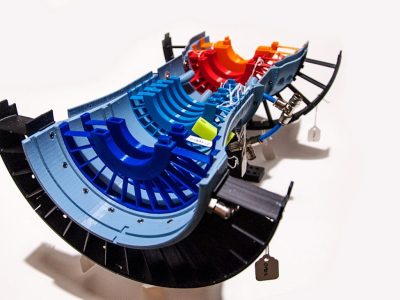
Colorful 3D-printed cutaway model of a jet engine showing internal turbine components.

Weight Reduction

In aerospace, lighter parts contribute to better performance, especially in jet engine components and satellite structures. With Markforged materials, engineers can now replace traditional aluminum brackets or tooling with durable 3D-printed alternatives, streamlining workflows and cutting costs. As a result, components are lighter and easier to install with better structural integrity.

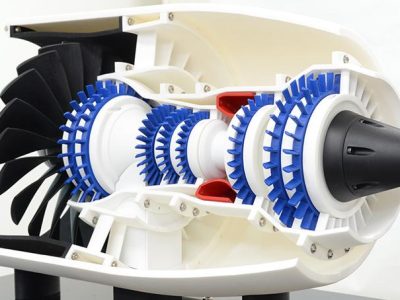
Japanese Company 3D Prints a Large Working Jet Engine Replica - 3DPrint.com | The Voice of 3D Printing / Additive Manufacturing

Jet Engines

Jet engines require complex geometries and high performance. 3D printing solutions are capable of producing these parts in high strength and heat resistant materials. In addition, the parts are often produced at a reduced cost, and accelerated lead time with a streamlined design.

3D engine model displayed in SOLIDWORKS CAD software interface.

CAD Models

3D printing eliminates traditional tooling constraints by producing parts directly from CAD models. Engineers can quickly iterate designs, simulate stress conditions, and validate geometry- all before hitting print. This level of control ensures faster development cycles, reduced prototyping expenses, and more accuracy.

Markforged 3D Printing applications for Aerospace

Markforged is reshaping aerospace manufacturing by bringing precision, speed, and flexibility to the forefront of 3D printing. As a trusted partner of AW Miller, Markforged empowers aerospace engineers to rethink traditional production with on-demand capabilities that serve everything from commercial jets to cutting-edge NASA initiatives. By removing the bottlenecks of conventional tooling, their technology enables faster development cycles, lower lead times, and the creation of a digital inventory that keeps operations agile and cost-effective. For example, the Markforged FX20 is built for large, high-strength thermoplastic parts, and it’s capable of printing aerospace-grade materials. Their FR-A composites meet traceability and flame retardancy standards under 14 CFR 25.853, critical for aircraft interiors. With continued material certification underway through NCAMP, including Onyx FR-A and Carbon Fiber FR-A on the Markforged X7, the company is paving a reliable path for 3D printing to become a core technology in aerospace production.

ULTEMâ„¢ 9085 Filament for aerospace applications

Markforged’s latest aerospace-grade material, ULTEM™ 9085 Filament, is now available for use on the FX20 large-format 3D printer. This high-performance thermoplastic delivers exceptional flame, smoke, and toxicity (FST) characteristics, making it an ideal solution for aircraft interior paneling, brackets, handles, and knobs. With its high thermal stability and durability, ULTEM™ 9085 Filament is specifically engineered for demanding aerospace environments.

Markforged ULTEMâ„¢ 9085 Filament for Aerospace 3D Printing

Future-ready Aerospace Machining and Additive Innovation

The aerospace sector’s growth relies on technology, talent, and trust. With the integration of Markforged 3D printing and Mazak CNC machining, engineers have more powerful tools than ever before. These options offer precision, weight reduction, and design flexibility to create a new standard for aerospace production.

By embracing both additive and subtractive technologies, companies position themselves to lead in a high-demand, high-requirement environment. At A.W. Miller, we support that vision by delivering solutions engineered for flight—every step of the way.