Companies across a variety of industries rely on contract manufacturing to reduce cost, increase efficiency, and scale production without capital investment.
A.W. Miller supports contract manufacturing companies with tailored solutions for CNC and 3D printing applications. Our integrated approach enables manufacturers to meet complex production requirements with speed, flexibility, and precision.
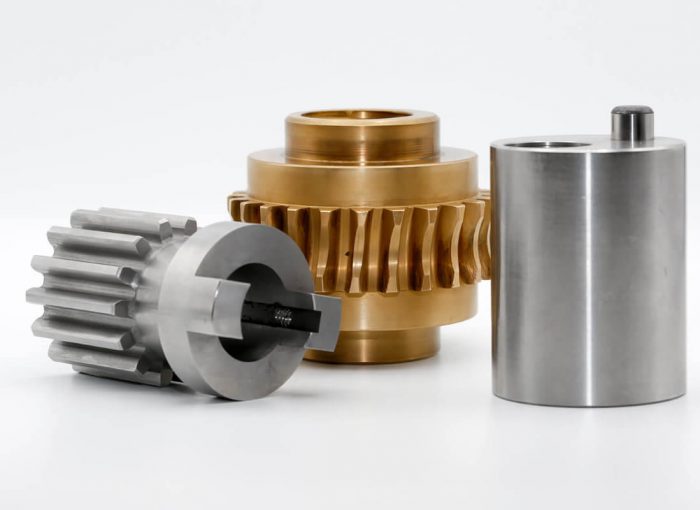
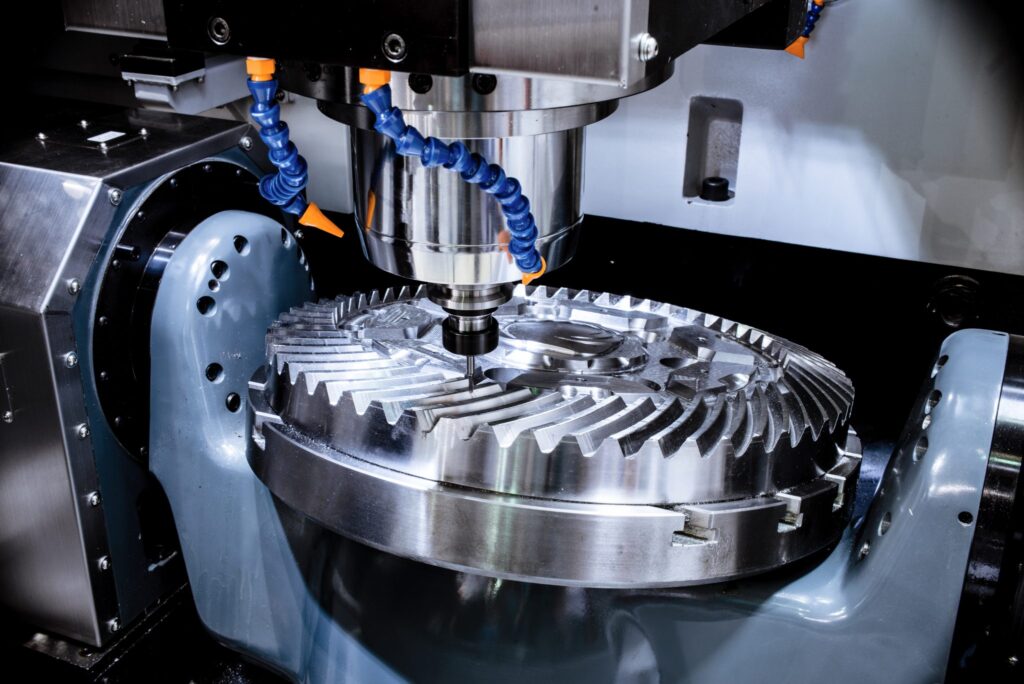
Combining CNC machining and 3D printing brings out strengths of both technologies. CNC ensures precision and material durability. Meanwhile, 3D printing supports rapid prototyping and complex geometries. This dual approach empowers contract manufacturers to deliver high-quality, low-volume runs and mass production with minimal setup time. Mazak’s 5-axis CNC machines provide unmatched agility for machining complex parts with fewer setups and tighter tolerances. These systems, supported by A.W. Miller, help contract manufacturers meet tight deadlines, even with short lead times or custom requirements.
Outsourcing production makes the most sense under the following conditions:
Mazak’s advanced machine tools and technology deliver precision, automation, and versatility to support contract manufacturers. For example, these machines are designed to improve cycle times, accuracy, and productivity as the systems support integration with AI and industrial automation. As a result, contract manufacturing companies can deliver custom setups tailored to project needs and performance goals across industries like aerospace, defense, medical, and electronics. Engineers and machine shops equipped with Mazak CNC systems are well-positioned to deliver high-quality, on-demand manufacturing services.
These capabilities are especially valuable when:
With Mazak’s precision, speed, and flexibility, shops can take on complex, high-tolerance work across industries like aerospace, medical, electronics, and industrial manufacturing—becoming a trusted extension of their customers’ operations.
For engineers and machine shops offering contract manufacturing services, 3D printing provides a powerful complement to CNC machining. For example, it provides rapid turnaround for prototypes, specialized tooling, and low-volume parts—allowing shops to serve customers more efficiently and flexibly. Contract manufacturers can also accelerate design validation and reduce time-to-market, especially in industries where agility is essential. Applications range from lightweight brackets and custom housings to complex jigs, fixtures, and one-off parts. Rapid production of complex parts gives shops a clear edge in creating parts that may change in design, even with tight deadlines.
3D printing is especially useful during the prototyping phase, where it helps validate form, fit, and function before committing to full CNC runs. This reduces material waste and overall cost while allowing customers to make informed decisions early in the development cycle. By integrating advanced 3D printing systems alongside Mazak CNC machines, contract manufacturers can offer a more versatile, responsive service portfolio—one that meets the modern demands of aerospace, medical, and high-tech industries.
As 3D printing technology continues to advance, contract manufacturers face increasing pressure to stay competitive and responsive to client needs. Meeting these demands requires more than hardware—it involves the right mix of materials, software, process expertise, and strategic support.
Through a consultative approach, engineering teams can evaluate a shop’s structure, target markets, and production goals to recommend tailored solutions. This includes selecting the most suitable 3D printers, configuring materials for specific applications, and implementing efficient digital workflows to support both prototyping and end-use part production.
Ongoing technical support remains critical. When manufacturers encounter complex design files or require deeper insight into specific materials or print processes, engineering consultants can step in to assist. Whether it’s fine-tuning print parameters, optimizing design for manufacturability, or validating material performance, this added layer of expertise helps ensure every 3D printed part meets quality expectations and drives customer satisfaction.
